The 1st International Potato Symposium, held on 5 October in Madrid on the eve of Fruit Attraction, successfully brought together around 250 professionals from across Europe, providing a valuable platform for the entire potato value chain to exchange perspectives, discuss common challenges and explore opportunities for the future of the sector.
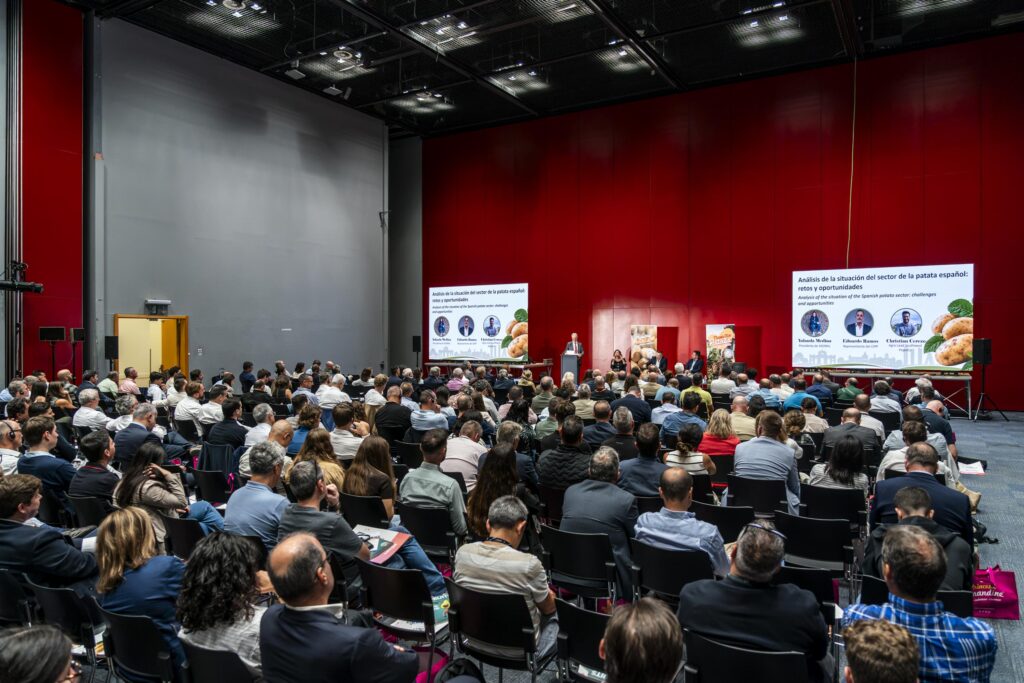
Organised by FEPEX, in collaboration with Fruit Attraction and Europatat, the Symposium took place on the eve of Fruit Attraction 2026, where potato was selected as this year’s Star Product.
The first edition brought together representatives from potato production, trade, processing, input suppliers, sector organisations and public institutions, highlighting the importance of dialogue and cooperation across the European potato value chain.
The event opened with institutional addresses by Cecilio Peregrín, President of FEPEX; Alejandro Lorca, Deputy Director General for Fruit, Vegetables and Viticulture at the Spanish Ministry of Agriculture, Fisheries and Food; and Joaquín Antonio Pino, Regional Minister for Agriculture, Livestock, Rural Affairs and Environmental Policy of Castilla y León.
Throughout the afternoon, speakers addressed some of the most pressing issues currently facing the European potato sector, including production and market developments, competitiveness, plant health, innovation and sustainability.
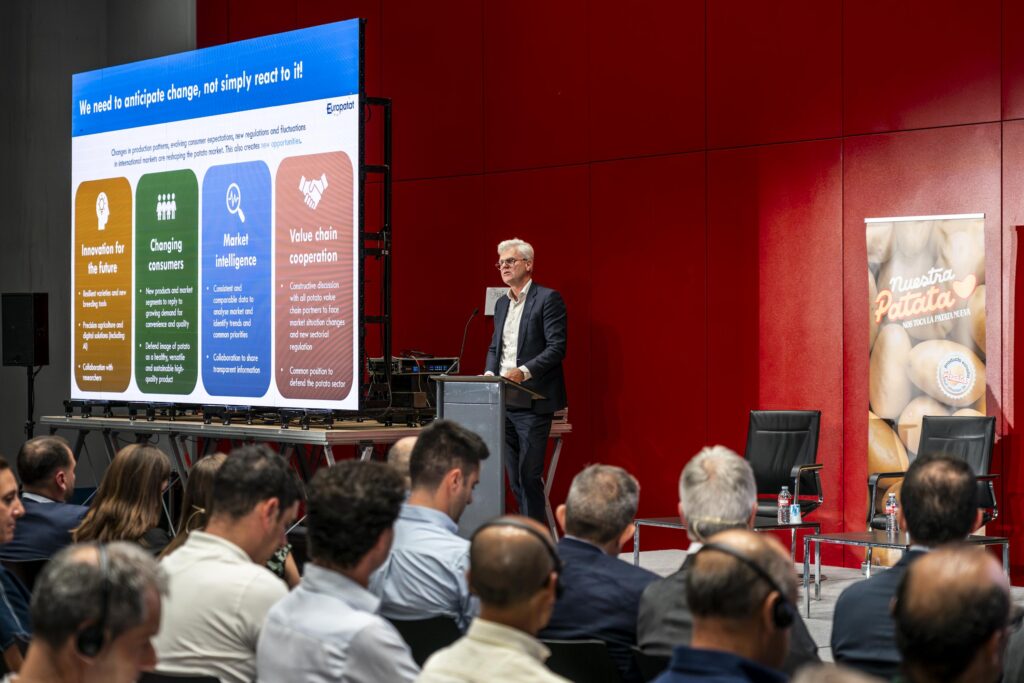
Peter Ton, President of Europatat, opened the sector presentations with an overview of the challenges facing European potato production and trade. His intervention highlighted the increasing complexity of potato production due to climate change, plant health pressures, water availability and rising costs, as well as the importance of a well-functioning EU Single Market, fair international trade and clear, workable regulatory frameworks.
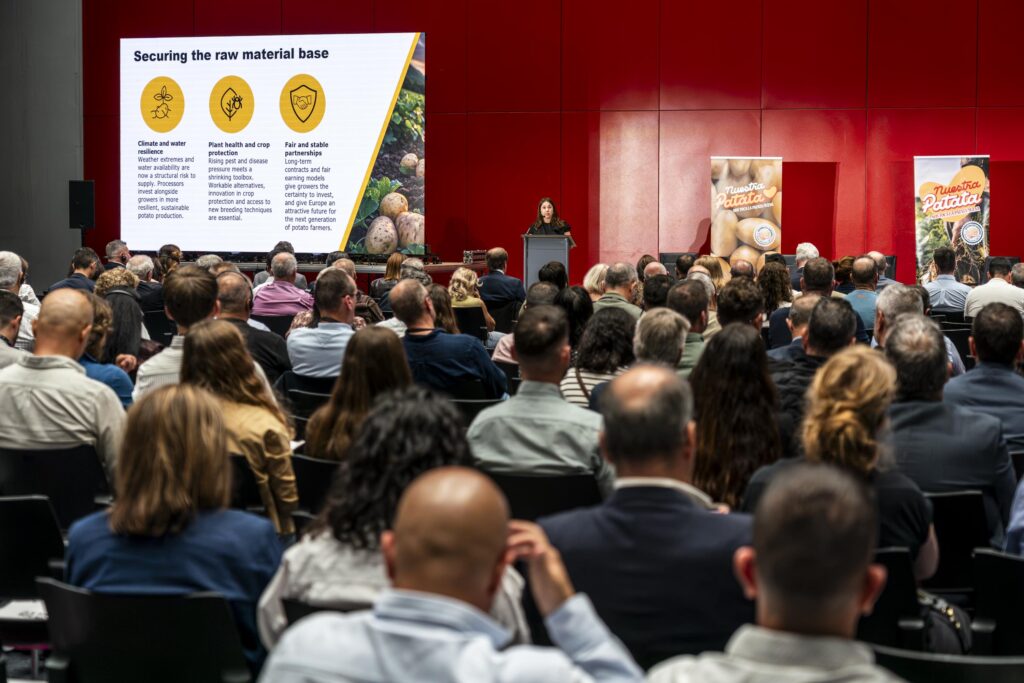
The perspective of the European processing industry was presented by Nuria Moreno, Secretary General of EUPPA, who addressed the sector’s competitive position, the challenges of securing high-quality raw materials, increasing production costs and global competition, and the importance of sustainability and cooperation with growers.
Plant health was another central topic of the Symposium. Romans Vorss, Technical Affairs Director at Europatat, discussed current and emerging phytosanitary threats affecting potato production in Europe, stressing the need for early detection, effective prevention and coordinated responses, for instance through European-funded research programmes as PATAFEST and POMATO.
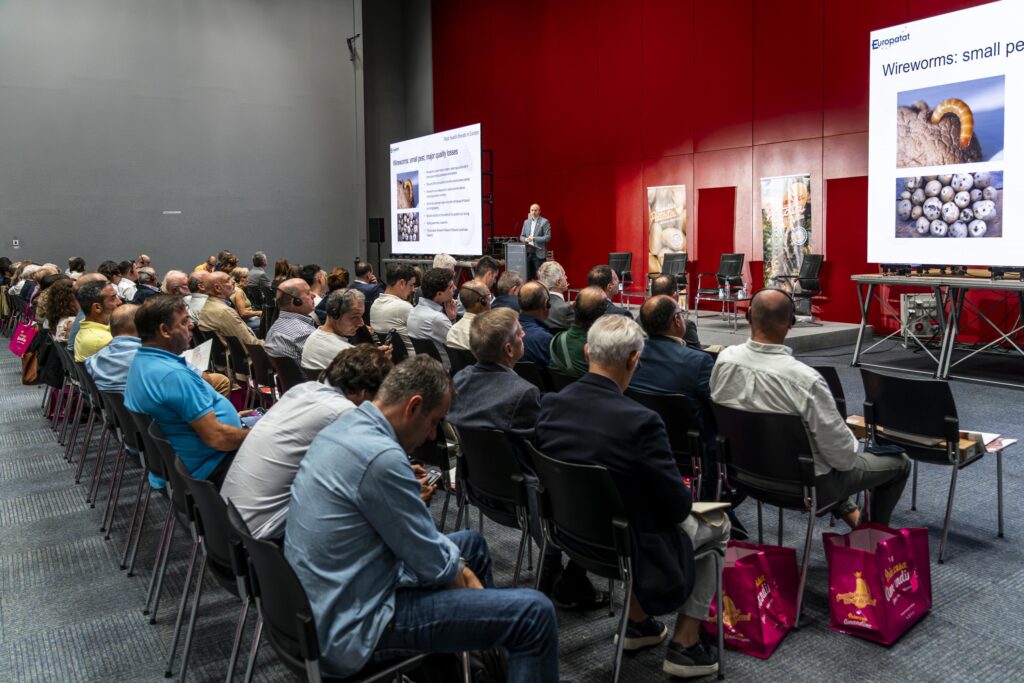
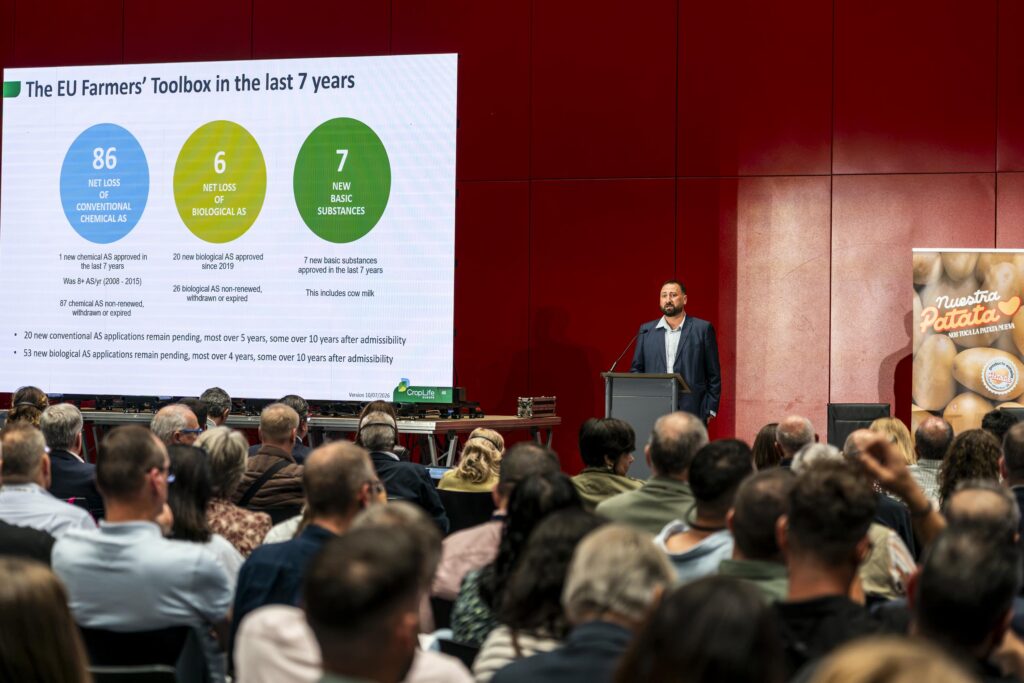
Michal Kicinski, Senior Manager for Sustainable Agriculture at CropLife Europe, provided an overview of the crop protection solutions available to European farmers and the challenges associated with maintaining an effective toolbox to protect crops against pests and diseases.
Innovation also featured prominently, with Alberto Martín from Corteva Agriscience presenting the potential of biological solutions to improve nutrient-use efficiency and support potato production.
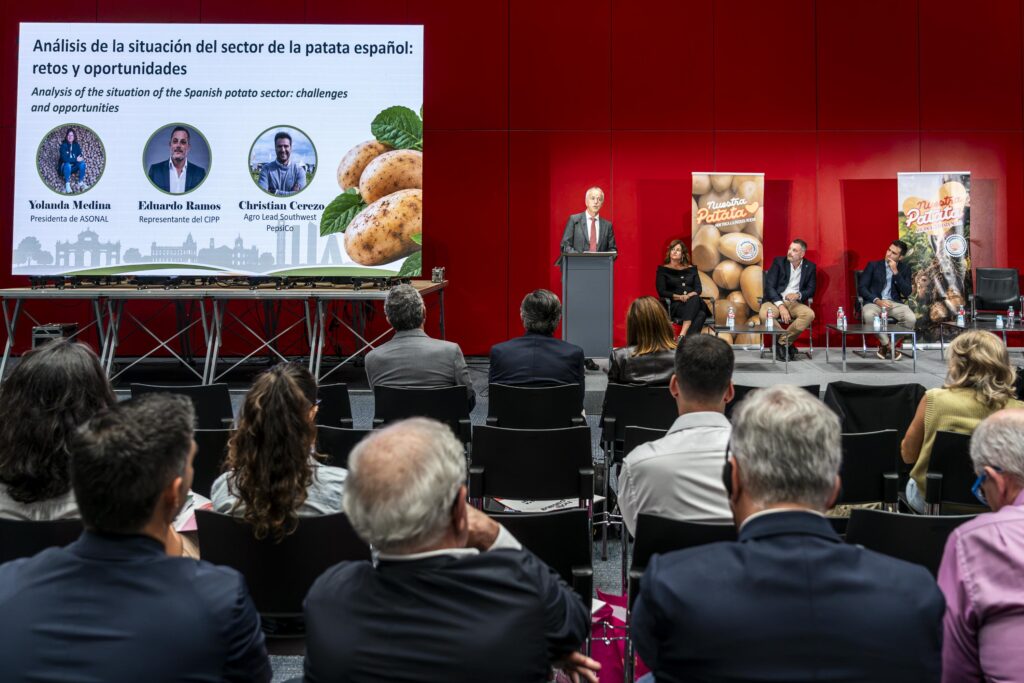
The Symposium concluded with a roundtable discussion on the Spanish potato sector, moderated by Alfonso Sáenz de Cámara, Chair of FEPEX’s Potato Sector Committee, with the participation of Yolanda Medina, President of ASONAL; Eduardo Ramos, representing CIPP; and Christian Cerezo, Agro Lead Southwest at PepsiCo. The discussion provided an opportunity to examine the challenges and opportunities facing the Spanish sector from different perspectives.
In her closing remarks, Berta Redondo, Director General of Europatat, emphasised the importance of working together across the entire potato value chain to address increasingly interconnected challenges. From climate resilience and plant health to market competitiveness, innovation and regulatory developments, she highlighted the need for greater coordination, constructive dialogue and shared solutions.
Redondo also welcomed the strong participation in this first edition, highlighting the value of bringing together professionals and organisations from different countries and areas of the potato business. The Symposium provided not only an opportunity to exchange knowledge and experiences, but also a valuable setting to strengthen professional relationships and cooperation at European level.
She further stressed the importance of a strong and united European potato sector, capable of anticipating change, identifying common priorities and ensuring that the voice of the potato trade and wider value chain is heard in European policy discussions.
Europatat would like to thank FEPEX and IFEMA Madrid for this successful initiative, all speakers and participants for their valuable contributions, and the sponsors and partners whose support made the event possible.
